
Net Metering Philippines: Steps, Documents, Fees and How Credits Work
Last checked · JH Solar guide
Net metering Philippines rules let a home or business with solar panels send unused daytime power to the grid and get peso credits on its electric bill. You apply with your distribution utility, either Meralco or your electric cooperative, and the utility installs a meter that records power in both directions.
This guide walks through who qualifies, the documents, the fees, how long each step takes, and how credits show up on your bill, with the 2025 rule changes and the 2026 faster permit timelines included. Rules change, so treat every figure here as accurate as of October 2026 and check the current requirements with your utility.
Net Metering Philippines: What It Is, in Plain Words
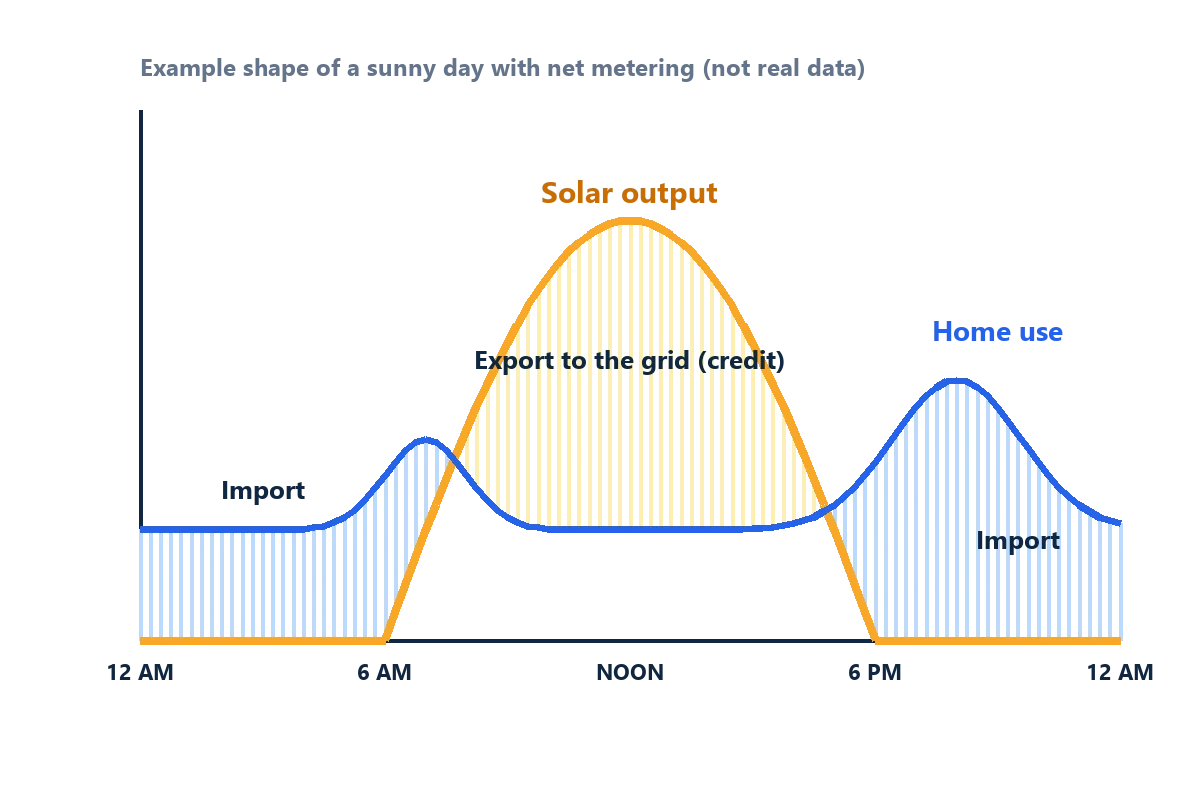
In net metering, your solar system serves your own loads first. When it makes more power than the house is using, the extra flows out to the utility’s lines on its own, and the utility credits you for it. At night or on cloudy hours you buy power from the grid as usual. Your bill then reflects both directions.
The idea comes from the Renewable Energy Act of 2008 (RA 9513), and the Energy Regulatory Commission (ERC) wrote the rules that put it into practice. They took effect on July 24, 2013, according to the DOE primer on net metering. The ERC amended them through Resolution No. 15, Series of 2025, issued on August 27, 2025, so older articles on net metering Philippines rules can be out of date.
Why people look it up
Most people search for net metering Philippines information right after a solar quote mentions a bidirectional meter, permits and an application. They want to know the steps, the costs, and whether the credits are worth it.
Who qualifies for net metering in the Philippines
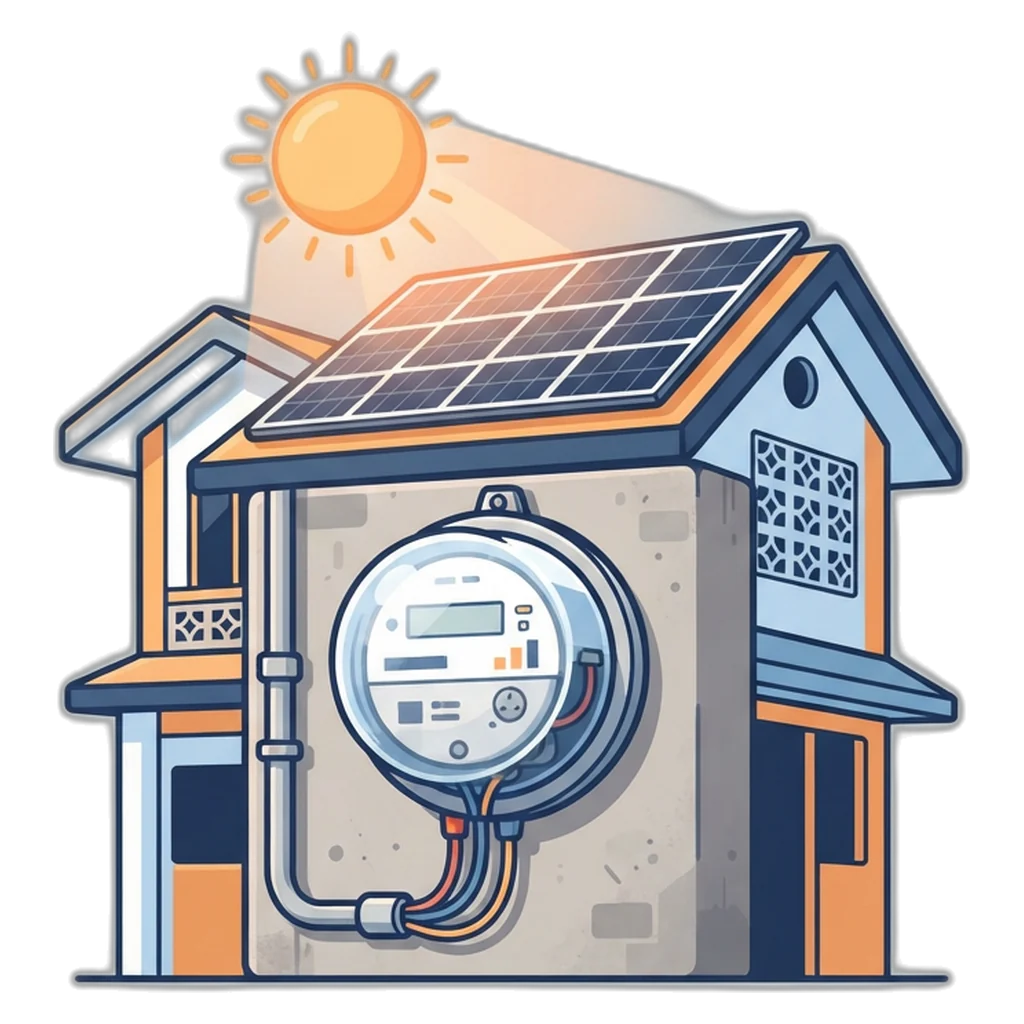
Qualifying for net metering Philippines programs is simpler than most people expect. The DOE primer and the Meralco net metering FAQ list the same basic conditions:
- You are a customer of the distribution utility in good credit standing, with no unpaid bills when you apply.
- The account is in your name. Meralco requires the account to be registered under the applicant.
- The system is up to 100 kW. Meralco states 100 kW, or 100 kWp for solar PV. That covers almost every home and small business system.
- It is a renewable energy system: rooftop solar is the most common, but wind, biomass, biogas and run-of-river micro-hydro also count, with or without battery storage.
Homes, schools, offices and shops can all take part as “qualified end-users.”
Grid-tied vs hybrid systems under net metering
The simplest net-metered system has no battery: panels feed a grid-tie inverter, which feeds your panel board. Our on-grid solar diagram shows every part. The catch: a grid-tie inverter shuts down in a brownout (anti-islanding) to protect line workers, so it gives no backup.
A hybrid adds a battery and a backup output. Because the DOE counts systems with or without battery storage, a hybrid can also be net-metered if the utility approves the setup. Surplus charges the battery first, then goes to the grid. See our hybrid solar diagram guide.
Where JH Solar units fit
Both JH Solar units are all-in-one hybrids. The JH Solar Version 2 is rated at 11 kW with a 15.36 kWh LiFePO4 battery, and the JH Solar Version 1 at 7 kW with 16 kWh. Either can run off-grid or with the grid, and can be net-metered if your utility approves the installed setup. Ask us if we can help with the application when you request a quote.
| Question | Grid-tied (no battery) | Hybrid or all-in-one (with battery) |
|---|---|---|
| Can it join net metering? | Yes, after utility approval | Yes, after utility approval |
| Where daytime surplus goes | Straight to the grid for credit | Battery first, then the grid |
| Power in a brownout | None: the inverter shuts down | Yes, on the backup output |
| Exported kWh per month | Usually higher | Usually lower, as the battery stores more |
General comparison. The actual export depends on your loads, array size, battery settings and weather.
The net metering Philippines process, step by step
The order below follows the Meralco FAQ and the ERC’s September 2025 advisory. Forms differ by utility, but the path is much the same. Your installer and electrician do the technical parts; you handle the account and signatures.
Step 1: Check your account and your utility’s current forms
Make sure the account is in your name with no unpaid balance, and get the current application form.
Step 2: Get a design and the LGU electrical permit
A registered master electrician (RME) or professional electrical engineer (PEE) designs the system. The city or municipal electrical permit comes before work starts.
Step 3: Install, then pass the final inspection
After installation, the LGU inspects the work and issues the Certificate of Final Electrical Inspection (CFEI). Keep export off or limited until approval.
Step 4: File the application with your utility
Submit the form, the CFEI and the signed net-metering agreement, and pay the fees. Notarization is not mandatory and electronic signatures are allowed under the ERC’s 2025 advisory.
Step 5: Technical review
The utility checks that its lines can accept your export. Meralco may run a Distribution Impact Study, which can find upgrades are needed first.
Step 6: Meter change, testing and commissioning
The utility replaces your meter with a bidirectional one if needed, then tests and commissions the connection. Under the 2025 advisory, testing and commissioning cost you nothing.
Step 7: Certificate of Compliance and your first credits
The ERC issues the Certificate of Compliance (COC) for the system. Credits start from the date of successful commissioning and appear on your first bill, whenever the COC application was filed.
For the roof work and install day, see our solar panel installation guide.
Net metering Philippines documents checklist
The ERC’s advisory of September 22, 2025, as reported by Power Philippines on the ERC net-metering advisory, told utilities to limit their requirements to four items. The table adds the permit and the optional items.
| Document or item | What it is | Where it comes from |
|---|---|---|
| LGU electrical permit | Permission to do the electrical work; needed before the CFEI | Your city or municipality |
| Application form | Utility form with details of your solar facility | Meralco or your cooperative |
| Certificate of Final Electrical Inspection (CFEI) | Proof the finished work passed inspection | Your LGU |
| Net-metering agreement (amended form) | Contract on how import and export are billed; no notarization required | Signed with your utility |
| Certificate of Compliance (COC) application fee | Payment for the ERC certificate covering your system | Paid through the process; ask your utility |
| Affidavit and waiver (only if you skip the REC meter) | Your choice to have generation estimated by formula | You sign it |
Requirements can change. Ask your utility for its current checklist in writing before you apply.
Net metering fees and costs
Only some net metering Philippines costs are fixed by the rules. The rest depend on your LGU, your utility and your installer. These are the amounts we could confirm:
| Item | Amount | Source |
|---|---|---|
| Meralco application fee | ₱1,500 | Meralco net metering FAQ |
| Bidirectional meter (difference in meter cost), residential | Capped at ₱3,000 | ERC advisory, Sept. 22, 2025 |
| Testing and commissioning by the utility | No cost to the applicant | ERC advisory, Sept. 22, 2025 |
| REC meter | Optional | 2025 amended rules |
| LGU electrical permit and inspection | Set by your LGU | Ask your city or municipal office |
| Design, installation and paperwork help | In your installer’s quote | Your installer |
The ₱3,000 cap applies when your old meter cannot record both directions and must be replaced. Cooperatives set their own application fees.
The equipment and labor cost far more than the fees; our solar price guide covers them.
How long net metering takes
Long waits were a common complaint about net metering Philippines applications, so in 2026 the government set deadlines. A joint circular of the DOE, DILG and DPWH, announced in February 2026, gives LGUs three working days for the electrical permit and seven for the CFEI once requirements are complete. In April 2026, Philstar reported the DOE’s 10-working-day directive for utilities, down from up to 20 working days.
| Step | Time limit | Counts from |
|---|---|---|
| LGU electrical permit | 3 working days | Complete requirements |
| LGU CFEI | 7 working days | Complete requirements |
| Utility processing of the application | 10 working days | Complete application |
| If an office does not act in time | Deemed approved | End of the time limit |
| Start of bill credits | From successful commissioning | First bill after commissioning |
The clock starts only when your papers are complete. Ask your LGU and utility how they apply these limits.
How net metering credits work on your bill
Under net metering Philippines rules, every kWh you export earns a peso credit. According to the DOE primer, the credit equals the utility’s blended generation cost, excluding other generation adjustments. That is lower than the full rate you pay per kWh, which also covers transmission, distribution, taxes and other charges.
The 2025 amended rules add banking and rollover, so unused credits carry over to future bills. Your agreement and bill show the current credit rate.
Worked example (hypothetical rates)
Example only: the rates are made up to show the math. Assume you pay ₱12 per kWh imported, and exports earn ₱6 per kWh.
| Line | Energy | Math | Peso value |
|---|---|---|---|
| Solar used directly at home | 300 kWh | 300 × ₱12 (power you did not buy) | ₱3,600 avoided |
| Solar exported to the grid | 150 kWh | 150 × ₱6 | ₱900 credit |
| Power imported from the grid | 350 kWh | 350 × ₱12 | ₱4,200 charge |
| Net energy amount | — | ₱4,200 − ₱900 | ₱3,300 |
Example only, simplified. Real bills have many line items, and which ones a credit offsets is set by the rules and your agreement.
In this example a kWh you use yourself is worth ₱12, and one you export is worth ₱6. That is why installers size for daytime use first; our solar computation tool finds that size from your bill.
Meralco vs electric cooperatives
Net metering Philippines programs are not only for Meralco customers. The ERC’s 2025 advisory went to all on-grid distribution utilities, so electric cooperatives handle applications for their own members under the same national rules.
What differs is the paperwork: forms, fees and offices. Under the 2025 rules, every utility must publish its net-metering forms and process on its website, plus quarterly hosting capacity for each distribution transformer, which shows whether your area can take more solar. Ask your cooperative for its checklist and fees in writing, and share it with your installer before the design is final.
The zero-export option
If you do not plan to send power to the grid, you do not need net metering. Your inverter is set so export stays at zero, and all solar goes to your own loads and battery. Meralco still asks you to tell it about the installation for safety, and it offers a separate zero-export sign-up.
The DOE’s rules for systems that do not export to the grid are in Department Circular DC2026-08-0017. It suits homes that use or store nearly all their solar. You still need the permit and a licensed electrician.
Common reasons net metering gets delayed
The net metering Philippines deadlines only start once your papers are complete. The usual hold-ups:
- Account issues: the account is under someone else’s name, or there is an unpaid balance.
- Incomplete papers: a missing CFEI, an unsigned agreement, or an old form version.
- Mismatch: the installed system differs from the plans or the application, such as a different inverter or panel count.
- Grid capacity: the local transformer is near its limit, and a study finds upgrades are needed.
- Export too early: the inverter exports before approval, and the utility asks for changes.
- Unclear roles: nobody owns the follow-up between you, the installer and the utility.
Agree in writing who files each document, and keep every receipt and proof of filing.
Is net metering worth it? An honest look
Net metering Philippines credits help, but they are not the main source of value. Most of the benefit of solar comes from the power you use yourself, because each of those kWh replaces one you would buy at the full rate. Exports earn less per kWh.
| Situation | Net metering value | Why |
|---|---|---|
| Home is empty in daytime (work, school) | Higher | Much of the noon output would otherwise go unused |
| Hybrid with a battery that absorbs most surplus | Lower | Little is left to export after charging |
| Heavy daytime use (aircon, shop chillers) | Lower | Solar is used on site, which is worth more |
| Frequent brownouts | Not the answer | Net metering adds no backup; a battery does |
Weigh the fees and paperwork against how many kWh you will really export. For homes that use almost everything they make, zero export may be simpler.
On your phone: net metering tips
- Photograph every permit, certificate and receipt, and keep them in one album named for the project.
- Save your utility’s net-metering page and the reference number of your application.
- Once approved, photograph the import and export readings on the meter each month and compare them with the bill.
- Check your inverter app for daily export; a sudden drop on sunny days can mean a fault or a changed setting.
- Turn on app alerts for grid loss, so you know when the system pauses during brownouts.
Brownouts, typhoons and rainy season
Net metering does not keep your lights on. In a brownout, every grid-connected inverter stops exporting at once to protect line workers. A grid-tied system goes dark, while a hybrid keeps its backup panel running from the battery and panels. If outages are common where you live, the battery matters more than the credits.
Peak sun hours are typically about 3.5 to 5 a day, depending on place and season, so expect more export in the dry months and less in the rainy season. After a typhoon, have the mounting and cables checked.
Safety and Electrical Reminders
- Never wire solar to your panel board, meter or the grid yourself. That work is for a registered master electrician or professional electrical engineer, with an LGU permit.
- Do not export before the utility approves your connection. Keep the inverter at zero or limited export until it confirms in writing.
- Anti-islanding must stay on. It shuts the inverter off when the grid fails so line workers are not shocked by power from your roof.
- Never open, move or break the seal on the utility meter. Only the utility does that.
- Panels and DC cables stay live in daylight even when the AC breaker is off.
Solar panels make DC power whenever light hits them, and batteries hold enough energy to start a fire if they are shorted. Work on the grid side, the AC panel board or a net-metered system belongs to a licensed electrical practitioner following the Philippine Electrical Code. Our numbers are estimates, not a design or a quote.
Frequently Asked Questions
Do unused net-metering credits disappear at the end of the month?
Under the 2025 amended net-metering rules, as reported when the ERC released them, unused peso credits can be banked and rolled over to later billing periods instead of being lost. How your utility shows the carried-over amount on the bill can differ, so ask it to explain the line on your first net-metered bill.
Can a solar system with a battery join net metering?
Yes. The DOE describes eligible renewable energy systems as those with or without battery energy storage, so a hybrid inverter with a battery can be net-metered. The utility still reviews and approves the specific setup and its export settings, and the battery side must be installed and protected the way the manuals and your electrician require.
What happens to my solar credits if I sell the house?
The 2025 amendments allow banked credits to be transferred to the new owner, subject to conditions such as a conforme letter from the original owner, according to the ERC announcement as reported in the news. Raise it early with the buyer and your utility, because the account and the net-metering agreement must also move to the new owner.
Do I have to install a REC meter for net metering?
Not anymore. The 2025 amended rules made the REC meter, which records how much your system generates, optional. If you waive it, the utility estimates your generation with a formula in the rules, and you submit an affidavit and waiver. The bidirectional meter that records import and export is still needed.
Can net metering wipe out my whole electric bill?
Do not plan on that. Exported kWh earn a credit that is lower than what you pay for each kWh you import, night use still comes from the grid, and some bill items may not be covered by credits. Net metering helps most when your system first covers your own daytime use and only the surplus goes out.
Does the electric account have to be in my name to apply?
For Meralco, yes. Its net metering FAQ says the account must be registered under the applicant’s name and be in good standing, with no unpaid balance when you apply. If the account is still under a previous owner or a relative, transfer it first, then file the application. Cooperatives have their own rules, so ask your local office.
Conclusion: apply with your papers in order
Net metering Philippines rules are friendlier in 2026. Credits roll over, the REC meter is optional, utilities may ask for only four items, and the meter cost for homes is capped. LGUs and utilities also face firm deadlines.
The basics stay the same: an account in your name, a system up to 100 kW, a licensed electrician, an LGU permit and CFEI, and an approved connection before any export. Size your system for your own daytime use first, treat credits as a bonus, and check the current requirements with Meralco or your electric cooperative before you sign.
Size your system before you apply
Work out your daytime use and system size from your bill, then ask us about a site assessment and whether we can help with the application.
Related Guides
- JH Solar HomeStart here: JH Solar systems and every guide on one page.
- Grid-Tied Solar DiagramCut the day-time bill and export extra power with net metering.
- Hybrid Solar System DiagramSolar, battery and Meralco power working together.
- Solar ComputationTurn your electric bill into a system size in a few taps.
- Solar Panel InstallationWhat happens on install day, and what comes before it.