
Solar Battery Guide: Types, Sizing, Lifespan and Safe Placement
Last checked · JH Solar guide
A solar battery stores the energy your panels make during the day so you can use it at night or when the grid goes down. In the Philippines, where brownouts and typhoons can cut power for hours, solar battery storage is a common reason families look at solar in the first place.
This guide covers battery types, system voltage, nominal vs usable kWh, sizing for brownouts with worked examples, lifespan and safe placement. Every number is a labeled example with the formula shown or a JH Solar rated figure.
What a Solar Battery Does
It has two jobs. The first is night use: it stores extra daytime solar energy and releases it after sunset, so you buy less power from Meralco or your electric cooperative. The second is backup: when a brownout hits, a hybrid or off-grid system keeps chosen loads running from the battery.
A grid-tied system without a battery cannot do either: its inverter shuts down during a brownout to protect line workers. That is why most people who ask about batteries want power that stays on during brownouts.
Why Filipino homes look at batteries
Brownouts are a big reason, and typhoons can cut power for days. Evening use matters too: aircons, fans and TVs run after sunset, when panels make nothing.
With net metering, exported energy may be credited at a different, often lower, rate than the one you pay, so storing it for evening use can make sense. Check the current rules with your utility.
Benefits and trade-offs
The benefits are backup during outages, more of your own solar used after dark and less need for a generator. The trade-offs are cost, extra parts that need protection, some energy lost in each cycle, and slow aging.
Solar Battery Types: LiFePO4, Lead-Acid, AGM and Gel
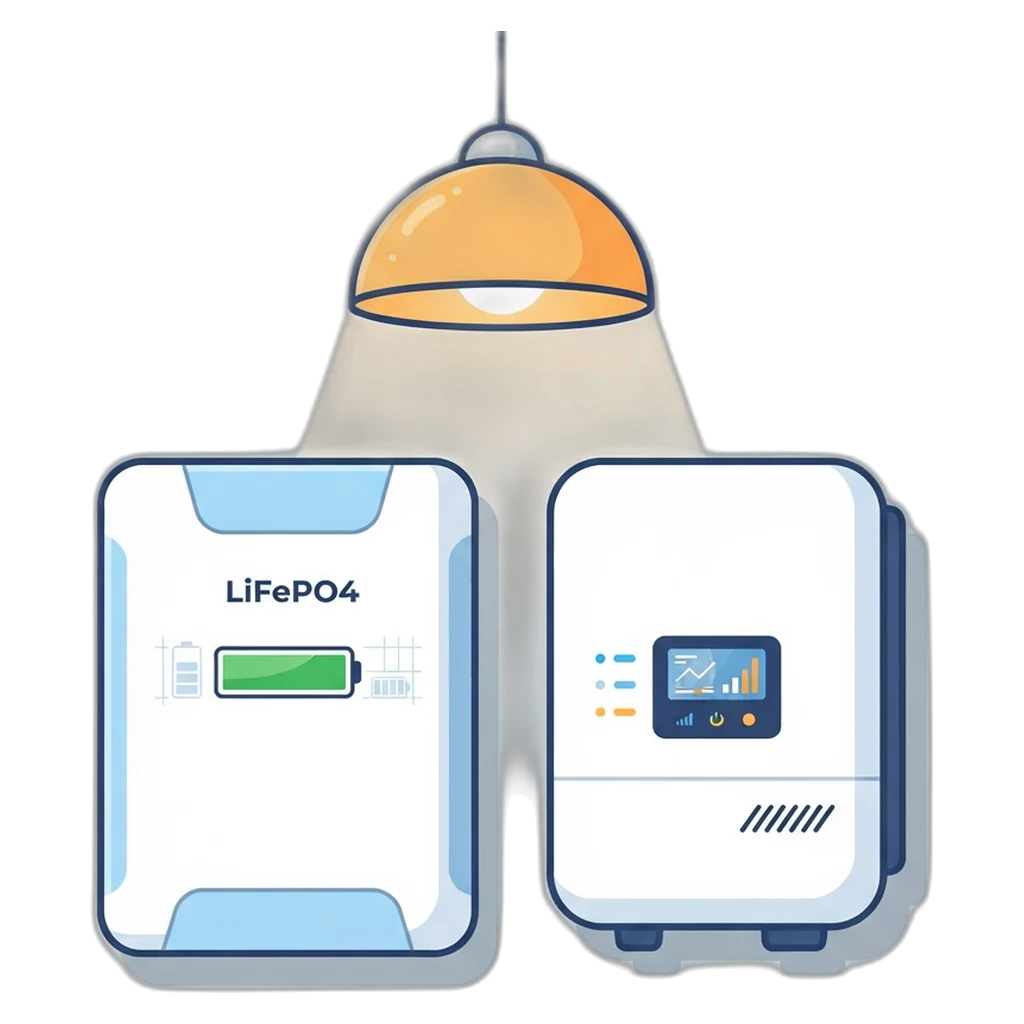
Most new home systems use a lithium iron phosphate solar battery, also called LiFePO4 or LFP. It handles deeper daily cycling than lead-acid, which is still sold for small or budget systems.
| Feature | LiFePO4 (lithium iron phosphate) | Flooded lead-acid | AGM / gel (sealed lead-acid) |
|---|---|---|---|
| Daily deep cycling | Handles deep daily cycles well. | Wears faster if drained deeply. | Wears faster if drained deeply. |
| Maintenance | Little routine care; check alarms and connections. | Regular water top-ups and terminal cleaning. | No water top-ups. |
| Gas and venting | No gassing in normal use. | Releases gas when charging; needs ventilation. | Little gassing in normal use; still keep ventilated. |
| Weight and space | Lighter and smaller for the same usable energy. | Heavy and bulky. | Heavy. |
| Upfront cost | Usually higher. | Usually lowest. | Between the two. |
| Electronics | Needs a BMS (built into most packs). | No BMS. | No BMS. |
| Good fit for | Daily home use and backup. | Budget off-grid kits with someone to maintain them. | Small backup systems where gassing is a concern. |
General comparison. Check the datasheet of the exact battery for cycle rating, depth of discharge and temperature limits.
12 V, 24 V or 48 V: Choosing the System Voltage
Small kits run at 12 V, mid-size off-grid systems often use 24 V, and many home hybrid systems use 48 V (some use high-voltage battery stacks instead). The reason for going higher is physics: power = voltage × current.
Example: to deliver 2,400 W, a 12 V battery must supply 2,400 ÷ 12 = 200 A, while a 48 V battery needs only 2,400 ÷ 48 = 50 A. Lower current means thinner cables, smaller fuses, less heat and fewer losses.
| System voltage | Typical use | Why |
|---|---|---|
| 12 V | Small DIY kits: lights, fans, phone charging. | Cheap parts and simple wiring, but current climbs fast as loads grow. |
| 24 V | Mid-size off-grid setups, farms, small shops. | Half the current of 12 V for the same power. |
| 48 V | Many home hybrid systems. | A quarter of the current of 12 V, so cables and protection stay practical. |
The battery voltage must match the inverter or charge controller input. Never guess; read both manuals.
If you are building a small kit yourself, the off-grid solar setup guide shows a safe 12 V layout with fuses, breakers and grounding. Anything that connects to your house wiring or the grid is a job for a licensed electrician.
Nominal vs Usable kWh, and the BMS
The nominal kWh on the label is not what you get. The system stops discharging before the battery is empty, and some energy is lost as heat in the battery, cables and inverter. What reaches your appliances is the usable energy.
A simple way to estimate it: energy to loads = nominal kWh × usable fraction × efficiency. Our examples use a usable fraction of 0.8 and an efficiency of 0.9. These are example assumptions; your battery and inverter settings may differ.
Example: a 10 kWh nominal battery × 0.8 = 8 kWh usable, and 8 × 0.9 = 7.2 kWh delivered to your appliances. When sellers quote “10 kWh”, ask each for the usable figure. Lead-acid banks are usually kept to shallower discharge than lithium, so the same label gives less usable energy.
What the BMS does
A lithium pack has a battery management system (BMS) inside. It watches cell voltages, current and temperature, balances the cells and cuts off the battery outside safe limits. In a well-matched system it also talks to the inverter so charging slows as the pack fills. It is a safety layer, not a replacement for correct fuses and breakers.
How to Size a Solar Battery for Brownouts
Sizing a solar battery starts with the loads you want to keep running and for how long. Then: kWh = watts × hours ÷ 1,000, and nominal battery = backup kWh ÷ (0.8 × 0.9), using the example usable fraction and efficiency.
| Load (example) | Watts | Hours | kWh = W × h ÷ 1,000 |
|---|---|---|---|
| LED lights | 50 W | 5 h | 0.25 kWh |
| Two electric fans | 100 W | 8 h | 0.80 kWh |
| Refrigerator (average draw) | 100 W | 8 h | 0.80 kWh |
| Wi-Fi router | 15 W | 8 h | 0.12 kWh |
| Phones and laptop charging | 60 W | 3 h | 0.18 kWh |
| TV | 100 W | 3 h | 0.30 kWh |
| Total backup energy | 2.45 kWh | ||
| Nominal battery needed | 2.45 ÷ (0.8 × 0.9) ≈ 3.40 kWh |
Example wattages only. Use the labels on your own appliances; a refrigerator cycles on and off, so its average draw is lower than its rated watts.
Aircon example: an 800 W aircon running 8 hours uses 800 × 8 ÷ 1,000 = 6.4 kWh. The nominal battery is 6.4 ÷ (0.8 × 0.9) ≈ 8.89 kWh, more than double the whole list above. Our solar panel for aircon guide covers the inverter surge side of that question.
Step by step
- List the loads you truly need during a brownout, with label watts and hours.
- Multiply watts × hours ÷ 1,000 for each load and add them up.
- Divide by usable fraction × efficiency to get the nominal kWh.
- Check the inverter kW covers loads running together, plus start-up surge.
- Check your panels can refill the battery, then round up to a size that is sold.
Can your panels refill it?
A big battery is no use if the panels cannot recharge it. Most places in the Philippines get about 3.5–5 peak sun hours a day, depending on location and season; look up your city on the Global Solar Atlas. Example: to make about 6.4 kWh a day for the battery, you need roughly 6.4 ÷ (4 × 0.75) ≈ 2.13 kWp of panels on top of what your daytime loads use, plus a little more to cover charging losses. In rainy weeks, the battery may start some nights less than full.
Also check the inverter: the battery sets how long you can run, but the inverter kW sets how much you can run at once; our inverter rating guide explains continuous and surge ratings. You can work out battery and inverter size from your bill with every assumption shown and editable.
Example: The JH Solar Version 1 and Version 2 Batteries
JH Solar sells two all-in-one units, each with a LiFePO4 battery and an inverter in one cabinet. Version 1 is rated 7 kW with a 16 kWh battery (51.2 V × 320 Ah). Version 2 is rated 11 kW with a 15.36 kWh battery (51.2 V × 300 Ah). To check: 51.2 × 300 ÷ 1,000 = 15.36 kWh. Using the same example assumptions:
Example: Version 1: 16 × 0.80 × 0.90 ≈ 11.52 kWh to AC loads. Version 2: 15.36 × 0.80 × 0.90 ≈ 11.06 kWh, or about 11 hours at a constant 1 kW load. Real backup time changes with your loads, the starting charge and the unit’s settings, so treat this as an example, not a promise.
The batteries are close in size; the inverter and solar input are what differ. Version 1 has one solar input of 4,480 W, which suits night backup and modest daily use, since that input cannot fully recharge 16 kWh in a short peak-sun window. See the JH Solar Version 1 battery and specs, or look at Version 2, with two solar inputs, for heavier daytime loads.
What Shortens or Extends Solar Battery Life
A battery does not fail on a fixed date. It loses capacity slowly, and how fast depends on use and location. The table lists the main factors.
| Factor | What it does | What helps |
|---|---|---|
| Heat | High temperatures speed up aging in every chemistry. | Shade, airflow and a spot away from hot walls and roofs. |
| Depth of discharge | Draining a battery deeply every day wears it faster, especially lead-acid. | Keep a reserve in the settings; size the battery with headroom. |
| Charge and discharge rate | Very high currents stress cells and raise heat. | Keep normal loads well inside the rating. |
| Cycle count | Each full charge and discharge uses part of the battery’s life. | Check the cycle rating on the datasheet and the warranty terms. |
| Long storage | Leaving a battery empty for long periods can damage it. | Never store it empty; follow the manual’s storage advice and check the system during long absences. |
Cycle ratings and warranty terms differ between models; only the datasheet and warranty document for your battery apply.
Battery Placement in Philippine Heat and Floods
Where you put the battery matters as much as which one you buy, given Philippine heat, typhoons and floods.
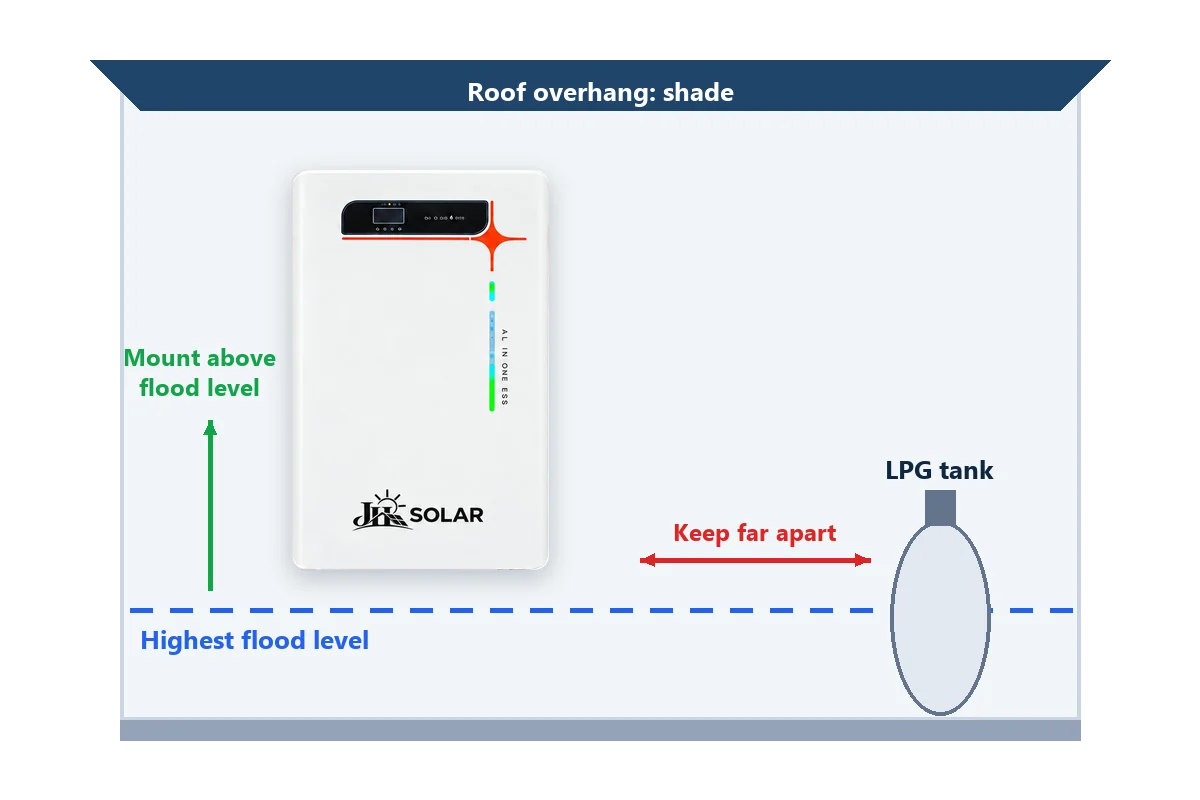
- Shade and ventilation. No direct sun or hot walls; leave the clearances in the manual.
- Above flood level. Mount or raise it well above the highest water level your street has seen. Flooding can short a battery and its wiring.
- Away from bedrooms and fuel. Keep it away from sleeping areas, LPG tanks and gasoline.
- Dry and secure. Protect it from rain, keep children and pets away, and keep the area tidy.
Before a typhoon, follow the PAGASA tropical cyclone wind signals and charge the battery fully while the grid and sun are still available. During the rainy season, panels may not fully recharge it each day, so plan backup use carefully.
What Affects Solar Battery Price
The solar battery price you are quoted moves with these factors (we list no peso prices, since they change):
- Capacity. More kWh costs more. Compare quotes by usable kWh, not nominal.
- Chemistry. LiFePO4 usually costs more upfront than lead-acid.
- Brand and warranty. A known brand with local warranty support and clear cycle or throughput terms often costs more.
- Format. Wall, rack or all-in-one designs and inverter communication add cost.
- Protection and installation. DC breakers, fuses, cables and labor are part of the real cost.
Example only: to compare two solar battery quotes fairly, use price ÷ usable kWh. A hypothetical ₱100,000 battery with 8 usable kWh works out to ₱100,000 ÷ 8 = ₱12,500 per usable kWh.
Battery and Inverter Compatibility
A battery only works with an inverter or charge controller that can charge it correctly. A standard grid-tie inverter cannot charge a battery at all, so adding storage to a grid-tied home usually means a hybrid inverter or a separate battery inverter. The US Department of Energy’s inverter basics page explains these roles.
- Voltage match. The battery voltage must sit inside the inverter’s battery input range.
- Communication. Many lithium batteries talk to the inverter through a data cable. Check that the battery is on the inverter’s compatibility list.
- Charge settings. The inverter must use the right charge profile for the chemistry.
Adding a battery to an existing system
With a grid-tied system, you can replace the grid-tie inverter with a hybrid one, or add a separate battery inverter on the AC side. Both involve AC-side work for a licensed electrician and a check of your utility’s rules.
An all-in-one unit avoids most of these questions because the battery and hybrid inverter are matched in one cabinet. The hybrid solar system diagram shows where the battery connects in a home system.
Maintenance, Warning Signs and Recycling
A LiFePO4 battery needs little routine care, but it is not maintenance-free. Keep vents clear and dust off, watch the display or app for alarms, and have your installer check connections on a schedule. Flooded lead-acid batteries need regular top-ups with distilled water and clean terminals; they give off hydrogen when charging, so keep flames and sparks away and wear eye protection when you handle them.
Before typhoon season, run your backup loads from the battery for an evening and note how long it lasts. If backup time has dropped a lot, talk to your installer.
Signs of trouble
- Swelling or bulging of the case.
- Unusual heat, a burning or chemical smell, or hissing.
- Repeated BMS faults, cell imbalance alarms or sudden shutdowns.
- Backup time dropping much faster than before.
- Corrosion or melted insulation at the terminals.
If you see any of these, switch the system off as the manual describes, keep people away and call your installer. Do not try to fix the pack yourself.
Recycling an old battery
Never throw a lead-acid or lithium battery in household trash or burn it. Ask your seller, installer or the manufacturer about take-back, and check with your LGU about hazardous waste collection.
On Your Phone: Monitoring Your Battery
Many hybrid inverters and batteries come with a monitoring app, which works as your early warning system.
- Watch state of charge. Check the battery percentage before evening and before a forecast storm.
- Set alerts. Turn on low-charge and fault notifications so problems reach you even when you are away from home.
- Screenshot fault codes. Send them to your installer by chat; it speeds up support.
- Keep the link alive. Many apps rely on home Wi-Fi, so put the router on the backup circuit if you want updates during a brownout.
- Secure the account. Use a strong password and do not share logins in group chats.

Safety and Electrical Reminders
- Short circuits start fires. A battery can push a very high current through a short. Keep metal tools, rings and watches away from terminals, and use insulated tools.
- Fuse it at the battery. Every battery needs a correctly rated DC fuse or breaker close to the positive terminal, sized for the cable.
- Switch off before any work. A battery stays live when the grid is off. Before anyone touches the wiring, follow the manual’s shutdown steps and open the battery breaker and the DC disconnect.
- Never open a pack. The cells and BMS inside are not user-serviceable. Opening one can cause a short, a fire or injury, and voids the warranty.
- Do not mix. Never mix chemistries, brands, or old and new batteries in one bank unless the maker allows it.
- After a flood, hands off. Do not touch or restart a battery that has been under water; call your installer.
- Check marks and licensing. Look for DTI-BPS PS or ICC marks where they apply, and have a registered master electrician (RME) or professional electrical engineer (PEE) connect the battery system to your home wiring.
Solar panels make DC power whenever light hits them, and batteries hold enough energy to start a fire if they are shorted. Work on the grid side, the AC panel board or a net-metered system belongs to a licensed electrical practitioner following the Philippine Electrical Code. Our numbers are estimates, not a design or a quote.
Frequently Asked Questions
What is the difference between a battery’s Ah and kWh ratings?
Ah (amp-hours) measures charge, while kWh measures energy, which is what runs your appliances. To convert, multiply Ah by the nominal voltage and divide by 1,000. Example: a 100 Ah battery at 48 V holds 100 × 48 ÷ 1,000 = 4.8 kWh nominal. Always compare batteries in kWh.
How many years does a LiFePO4 battery last?
There is no single answer. Life depends on how many cycles you use, how deep each cycle goes, the charge rate and, above all, temperature. Read the cycle rating and warranty terms on the datasheet, and keep the battery cool and shaded.
Can I mix an old battery with a new one?
It is usually not recommended. An older battery has lost some capacity, so the two will not share charge evenly and the weaker one drags the bank down. Some makers allow added packs only of the same model, and only within a set time. Ask your installer or check the manual first.
Is it safe to keep a solar battery inside the house?
Many homes keep a LiFePO4 battery indoors, but placement still matters. Use a dry, shaded, ventilated spot away from bedrooms, the kitchen and fuel, raised above flood level, with the clearances in the manual. Flooded lead-acid batteries release gas when charging and need a well-ventilated area, never a closed room.
Can a solar battery run an aircon during a brownout?
It can, if the inverter handles the aircon’s running power and start-up surge and the battery holds enough usable kWh. An aircon drains a battery much faster than fans and lights, so work out the kWh first from its label wattage and the hours you need.
What should I do with my solar battery before a typhoon?
Charge it fully while the sun and grid are still available, and follow the PAGASA wind signals for your area. Check that the battery sits above the expected flood level. If water may reach it, shut the system down as the manual describes. After a flood, do not touch or restart it; call your installer first.
Conclusion: Size It, Place It, Protect It
A solar battery turns daytime sunshine into nighttime power and brownout backup. Choose the chemistry that fits your use, match the voltage to your inverter, size it from your real loads using usable kWh, and place it somewhere cool, dry and above flood level.
Treat every backup estimate as an example, check the datasheet for life and warranty terms, and leave the connection to your home wiring to a licensed electrician. With those basics, solar battery storage can serve your home well through brownouts and typhoon season.
Find the battery size your home needs
List your brownout loads, work out the kWh and see what battery and inverter size fit, then ask JH Solar for a site assessment.
Related Guides
- JH Solar HomeStart here: JH Solar systems and every guide on one page.
- Solar ComputationTurn your electric bill into a system size in a few taps.
- JH Solar ProductsOur two all-in-one units, side by side.
- Hybrid Solar System DiagramSolar, battery and Meralco power working together.
- Power Station With Solar PanelPortable power stations vs a whole-home system.
- Solar Panel Price PhilippinesPanel, battery and installation costs, line by line.