
On-Grid Solar System Diagram: Grid-Tied Setup and Net Metering
Last checked · JH Solar guide
An on-grid solar system diagram is the simplest solar layout for a home that already has power from Meralco or an electric cooperative. Panels feed a grid-tie inverter, the inverter feeds your panel board, and the grid fills in whatever solar cannot cover. There is no battery in the basic version.
Homeowners look for this diagram when they want a lower daytime bill and want to understand net metering. This guide explains every part, how power flows, why the system shuts off in a brownout, and the net-metering steps. The grid-side wiring is work for a licensed electrician, so use this page to understand and check the job.
Reading the on-grid solar system diagram
Read the on-grid solar system diagram from the top left. DC power flows from the panels through a DC isolator to the grid-tie inverter. AC power then goes down through a breaker to the main panel board, which serves your loads and connects to the utility through a net meter.
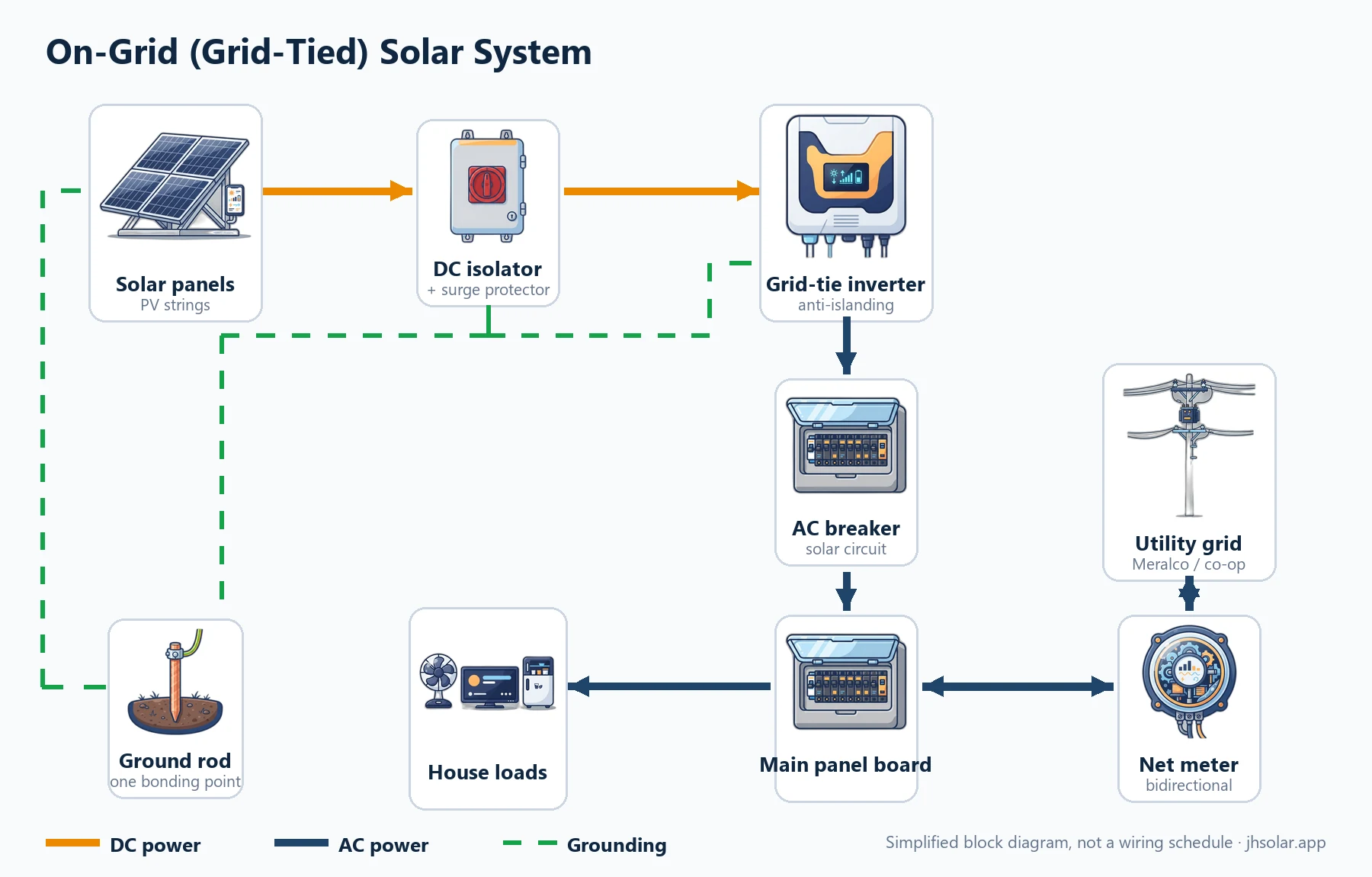
Solar panels connect through a DC isolator and surge protector to a grid-tie inverter. The inverter output goes through an AC breaker to the main panel board, which serves household loads and connects to the utility through a bidirectional net meter that records import and export. The panel frames, isolator and inverter bond to a grounding rod. There is no battery, so the system shuts off during a brownout.
Orange lines are DC, navy lines are AC, and green dashed lines are grounding. If any of these symbols are new, start with our solar setup diagram basics, then come back. The table lists each block in the order power travels.
| Block | What it does | Who installs it |
|---|---|---|
| Solar panels (PV strings) | Turn sunlight into DC power, wired in strings to the inverter. | Installer, on wind-rated mounting |
| DC isolator + surge protector | Switches the panels off for service and diverts surges to ground. | Installer |
| Grid-tie inverter | Turns DC into AC that matches grid voltage and frequency; shuts down when the grid fails. | Installer and licensed electrician |
| AC breaker (solar circuit) | Protects the cable from the inverter and lets you isolate the solar side. | Licensed electrician only |
| Main panel board | Where solar power, grid power and your house circuits meet. | Licensed electrician only |
| Net meter (bidirectional) | Measures power bought from and sent to the grid. | Your utility installs or approves it |
| Ground rod | Bonds frames, rails and the inverter to earth. | Installer and licensed electrician |
A block diagram, not a wiring schedule. Wire and breaker sizes come from the manuals and the electrician.
Who an on-grid setup suits
An on-grid solar system diagram fits homes and small businesses that use a lot of power in daytime and rarely lose grid power for long. Think of a family that works from home with the aircon on, a sari-sari store with chillers, or a small office open from morning to late afternoon.
It suits people less well if brownouts are frequent where they live, or if most of their use is at night. In those cases a battery usually matters more than a bigger array, and a hybrid is the better match.
Daytime self-consumption: how power flows
In an on-grid solar system diagram, solar always serves the house first. Power takes the easiest path, so whatever the inverter makes goes to the loads running at that moment: the aircon, fridge, fans and computers. This is called self-consumption, and it is where most of the bill benefit comes from.
If solar makes more than the house uses, the extra flows out through the meter to the grid. If solar makes less, the grid supplies the difference without any switching. At night solar is zero, so every kWh comes from the grid. That is why grid-tied systems suit homes and shops that use much of their power in daytime.
Getting more from self-consumption
You can raise the share of solar you use yourself by moving flexible chores into the sunny hours. Run the washing machine, ironing and the water pump between late morning and mid-afternoon. Charge e-bikes, power tools and laptops then too. These small habits cost nothing and mean less of your solar leaves through the meter while you buy power back at night.
Anti-islanding: why it shuts off in a brownout
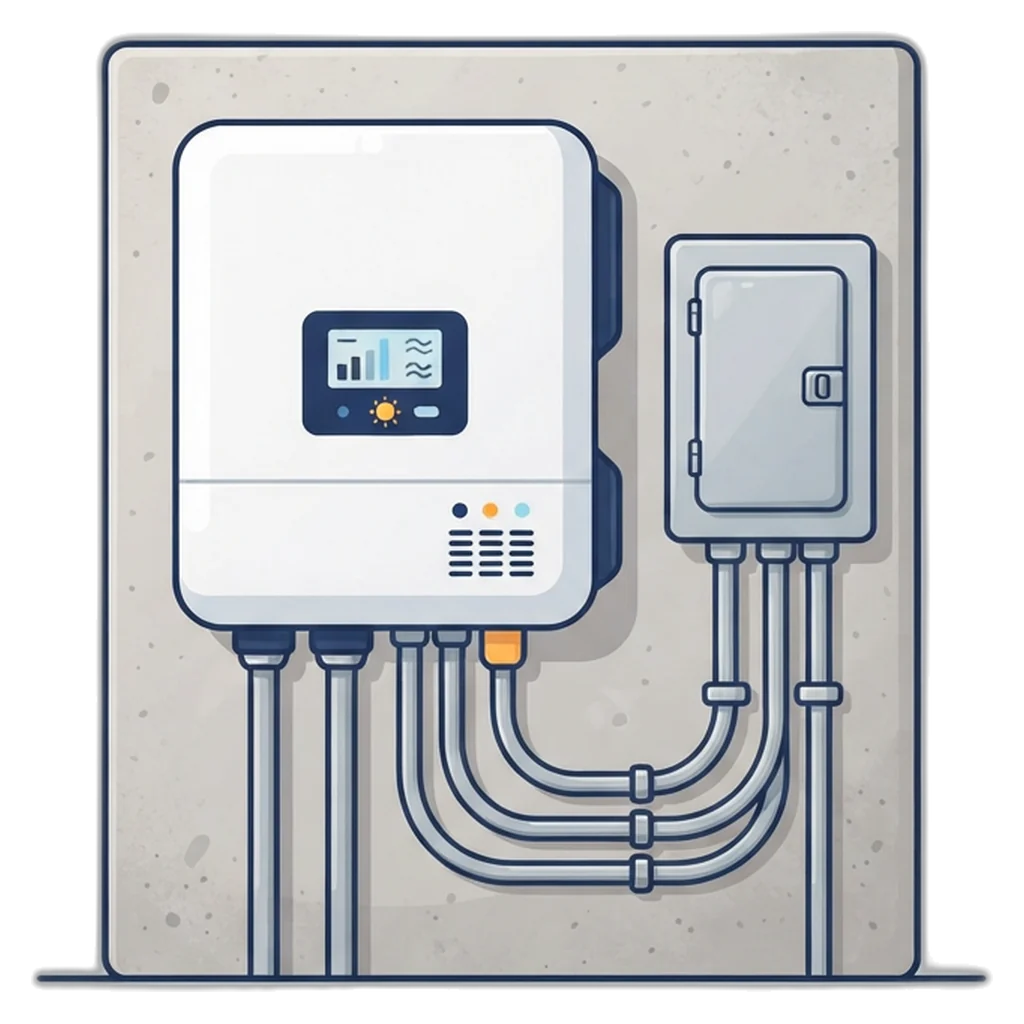
This is the part of an on-grid solar system diagram that surprises people. When the grid fails, the grid-tie inverter shuts down, even at noon. This is called anti-islanding, and it protects line workers who are repairing what they believe is a dead line.
How the inverter knows the grid is down
A grid-tie inverter watches the grid’s voltage and frequency all the time. If either goes outside the allowed range, or the grid disappears, it disconnects. When the grid comes back, it waits until the supply is stable for a set time before it starts producing power again. You will see this as a short delay after power returns. Our solar inverter guide covers grid-tie, hybrid and off-grid models side by side.
So a grid-tied system without a battery gives no backup power in a brownout. If you want lights and fans during outages, you need a battery and an inverter with a backup output. Our hybrid setup with battery backup shows how that works. Both JH Solar systems are all-in-one hybrids, with the battery built into the cabinet.
The bidirectional net meter
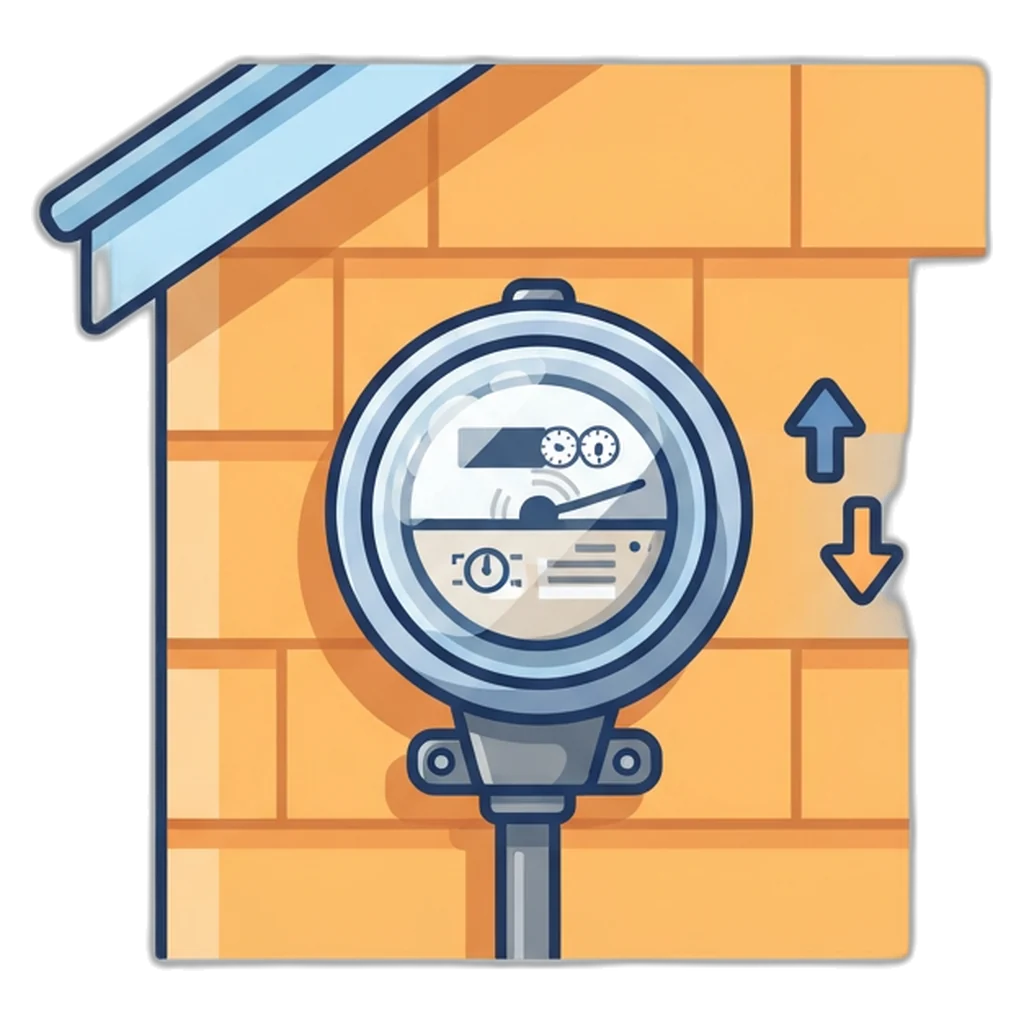
The box on the right of the on-grid solar system diagram is the net meter. A standard meter counts power in one direction. A bidirectional meter counts both: the kWh you import from the grid and the kWh you export to it.
Under net metering, your utility uses both readings on your bill, and exported energy is credited under the rules and your net-metering agreement. For background on how such schemes work around the world, see the overview of net metering. The utility installs or approves the meter; homeowners never touch it.
The two readings are not worth the same. As the DOE describes the rules, each exported kWh earns a peso credit at the utility’s blended generation cost, which leaves out the transmission, distribution and other charges you pay on imports. Since the 2025 amendments, credits you cannot use in a month carry over to the next bill.
After the switch, your bill shows import and export lines instead of a single reading. Ask your utility to walk you through your first bill so you know which numbers to compare with the inverter app and the on-grid solar system diagram your installer gave you.
How a grid-tied system is installed
Knowing the order of work helps you follow the job and spot gaps. This is how an on-grid solar system diagram becomes a working grid-tie system. Your part is the load list and the paperwork; the wiring belongs to the installer and a licensed electrician.
- Site visit: roof condition, shading, wall space for the inverter, and the state of the main panel.
- Design: panel count, string layout checked against the inverter limits, cable runs and breaker sizes.
- Mounting: rails fixed to the roof structure with sealed penetrations, suited to wind loads.
- DC side: strings run in conduit to the DC isolator and surge protector; polarity and voltage checked before connection.
- AC side: the electrician installs the solar AC breaker and connects the inverter to the main panel board.
- Grounding: frames, rails and the inverter bonded to the ground rod.
- Commissioning: grid settings checked, export limited until the utility approves, app set up and handed over.
Net metering in the Philippines: the short version
Net metering is the paperwork side of the on-grid solar system diagram. It rests on the Renewable Energy Act of 2008, Republic Act 9513, and the ERC amended the rules in 2025: unused credits now roll over to later bills, and the REC meter is optional. Systems up to 100 kW qualify, and the account must be in your name and in good standing, per the Meralco net metering FAQ. Electric cooperative members apply through their cooperative.
Step 1: Design and permit
A registered master electrician (RME) or professional electrical engineer (PEE) designs the system, and the LGU electrical permit comes before work starts.
Step 2: Install and inspect
After the final inspection, the LGU issues the Certificate of Final Electrical Inspection (CFEI).
Step 3: Apply with your utility
File the form, the CFEI and the net-metering agreement, and pay the fees. Meralco lists a ₱1,500 application fee, and residential meter replacement is capped at ₱3,000 (as of October 2026).
Step 4: Meter, commissioning and COC
The utility fits the bidirectional meter and commissions the connection, and the ERC issues the Certificate of Compliance. Keep export off until your utility confirms.
For the full document checklist, the 2026 processing deadlines and a worked example of how credits appear on your bill, read our net metering guide for the Philippines.
Zero-export systems
Some owners skip export and set the inverter so it never sends power to the grid. The DOE covers these in Department Circular DC2026-08-0017, its rules for systems that do not export to the grid. Read it and talk to your utility before choosing this route.
Meralco’s FAQ says you do not need net metering if you will not export, but it still asks you to report the installation for safety and offers a separate zero-export sign-up. Cooperatives run their own process, so ask your local office what it needs.
Pros and cons of a grid-tied setup
An on-grid solar system diagram has fewer boxes than a hybrid one, and that shapes both its strengths and its limits. Weigh these before you ask for quotes.
| Topic | Pro | Con |
|---|---|---|
| Parts | No battery, so fewer parts to buy and replace | No stored energy for nights or outages |
| Brownouts | Shuts down safely on its own | No power in a brownout without a battery |
| Daytime bill | Solar covers daytime loads first | Night use still comes from the grid |
| Extra solar | Can be exported and credited with net metering | Export needs approval and paperwork first |
| Export credit | Unused credits roll over to later bills | Each exported kWh earns less than an imported kWh costs |
| Upkeep | Panels and inverter only; no battery to manage | Still needs cleaning, checks and inverter care |
| Upgrade later | Can be redesigned as a hybrid | Adding a battery often means a new inverter |
Sizing for daytime use
Size an on-grid solar system diagram to the power you use while the sun is up, not your whole monthly bill. Daytime kWh is what solar can cover directly. Our free solar panel calculator does the same math from your electric bill.
| Load (example) | Watts × hours | Energy |
|---|---|---|
| Aircon | 800 W × 8 h | 6.4 kWh |
| Refrigerator (average draw) | 100 W × 10 h | 1.0 kWh |
| Two laptops and fans | 200 W × 8 h | 1.6 kWh |
| Water pump | 500 W × 1 h | 0.5 kWh |
| Wi-Fi router and small loads | 50 W × 10 h | 0.5 kWh |
| Total daytime energy | Sum of the rows | 10.0 kWh |
Example only. Use the watts on your own appliance labels and your own hours.
Example: 10 kWh a day ÷ (4 peak sun hours × 0.75 system factor) = 3.33 kWp. With 720 W panels, 3.33 ÷ 0.72 = 4.63, rounded up to 5 panels. With the 620 W panels our calculator starts with, 3.33 ÷ 0.62 = 5.37, so 6 panels. The 4 hours and 0.75 are example assumptions; your location and roof change both.
Going much bigger than your daytime use mostly adds export. Under net metering, how exported energy is credited is set by the current ERC rules and your agreement, so ask your utility before you add panels for export alone. An on-grid solar system diagram sized to daytime use keeps more of the solar inside your own home.
Your installer then checks that the panel strings fit the inverter’s voltage and current limits. For what panels and full systems cost, see our price guide, and for permits and install day, the solar panel installation guide.
On your phone: tracking tips
Most grid-tie inverters connect to Wi-Fi and report to a phone app from the inverter maker. The app shows the same flows as your on-grid solar system diagram, from panels to house to grid.
- Check daily solar kWh on sunny days; a sudden drop can mean shading, dirt or a string fault.
- Turn on alerts for “grid fault” or “offline” messages so you know when the inverter stops.
- Photograph the import and export readings on the meter each month and compare them with your bill.
- Keep the permit, CFEI, COC and agreement as photos in one phone album.
- Note your application reference number and the commissioning date; credits start from that date.
- Save your installer’s contact in the app notes so the right person sees any fault code.
Typhoons, heat and rainy season
Every box in an on-grid solar system diagram sits in Philippine weather. Mounting must suit the wind loads for your area. Before a storm, follow PAGASA tropical cyclone wind signals, and after it, inspect rails, clamps and cables from the ground before anyone climbs the roof.
Heat lowers panel output a little as cells warm up, and inverters work best in shade with airflow. Peak sun hours are typically about 3.5 to 5 a day depending on place and season, and the rainy months bring lower output. During those weeks the grid simply supplies more, with no action from you.
Thunderstorms are common in the wet months, which is why the surge protector next to the DC isolator matters. After a nearby lightning strike, check the inverter app for faults and ask your installer to inspect the surge protector.
Safety and Electrical Reminders
- The AC breaker, main panel board and meter connection are work for a registered master electrician or professional electrical engineer. Never wire them yourself.
- Never plug a grid-tie inverter into an outlet or connect it before the utility approves the connection.
- Turning off the AC breaker stops the inverter, but the panels and the DC cables stay live in daylight.
- Do not open or move the utility meter or its seal. Only the utility does that.
- Keep the DC isolator and inverter labels readable so anyone can shut the system down in an emergency.
Solar panels make DC power whenever light hits them, and batteries hold enough energy to start a fire if they are shorted. Work on the grid side, the AC panel board or a net-metered system belongs to a licensed electrical practitioner following the Philippine Electrical Code. Our numbers are estimates, not a design or a quote.
Frequently Asked Questions
Why does my grid-tied system turn off during a brownout even on a sunny day?
That is anti-islanding, and it is required. When the grid goes down, the grid-tie inverter stops within moments so it cannot push power into lines that workers believe are dead. Without a battery and a backup output, there is nothing to keep your loads running, so the house goes dark like your neighbors’ houses.
Do I need net metering to install an on-grid solar system?
Not always. In an on-grid solar system diagram, net metering is what lets you export extra power and get credit for it. If you only want to use your own solar and never export, a zero-export setup is another route, with its own rules from the DOE. Either way, the system is grid-connected, so ask your utility what it requires before you install.
Can I add a battery to a grid-tied system later?
Usually not to the same grid-tie inverter, because it has no battery input. Common paths are replacing it with a hybrid inverter, or adding a separate battery inverter on the AC side. Both change the design, so your licensed electrician must plan the work, and the utility may need to be told about the change.
How long does net-metering approval take?
Deadlines were set in 2026: as reported, LGUs have three working days for the electrical permit and seven for the CFEI, and utilities ten working days for a complete application. The clock only starts when your papers are complete, so agree with your installer who handles each document, and confirm the current timeline with your utility.
Can I plug a small grid-tie inverter into a wall outlet myself?
No. A plug-in setup feeds power into house wiring that was never designed for it, skips the permit and the utility’s approval, and can leave live pins on a plug. Any system that connects to your panel board or the grid needs a licensed electrician, the proper breakers and grounding, and the utility’s go-ahead.
I am a member of an electric cooperative, not Meralco. Can I apply for net metering?
Yes. Net metering is not only for Meralco customers. Electric cooperatives handle applications for their own members under the same national rules, with their own forms, fees and steps. Visit or call your cooperative’s office, ask for its net-metering requirements in writing, and share them with your installer before the design is final.
Conclusion
An on-grid solar system diagram comes down to a few parts: panels, a DC isolator, a grid-tie inverter, an AC breaker, your main panel board and a bidirectional meter. Solar serves your daytime loads first, extra power can be exported with net metering, and the system switches off in a brownout to keep line workers safe.
Size it for daytime use, keep the documents in order, and leave the grid-side work to a licensed electrician. If backup matters to you, compare this on-grid solar system diagram with the hybrid version before you decide.
Find your daytime solar size
Turn your electric bill into a system size, then ask us about a site assessment and quote.
Related Guides
- JH Solar HomeStart here: JH Solar systems and every guide on one page.
- Solar Setup DiagramRead any solar diagram and pick the setup that fits you.
- Hybrid Solar System DiagramSolar, battery and Meralco power working together.
- Solar Panel InstallationWhat happens on install day, and what comes before it.
- Solar ComputationTurn your electric bill into a system size in a few taps.
- Solar Panel for AirconRun your aircon on solar: panels, battery and inverter.