Types of Solar Panels: Mono, Bifacial and Others Explained
Last checked · JH Solar guide
The types of solar panels on the market today look alike from the street, but they differ in how the cells are made, how much power they give per square meter, and how they handle heat. This guide explains each one in plain terms.
We cover monocrystalline (PERC, TOPCon and HJT), polycrystalline, thin-film, bifacial, half-cut and flexible panels. You will also learn how heat affects output, which panel suits your roof, and how to read the datasheet before you sign a quote.
The main types of solar panels
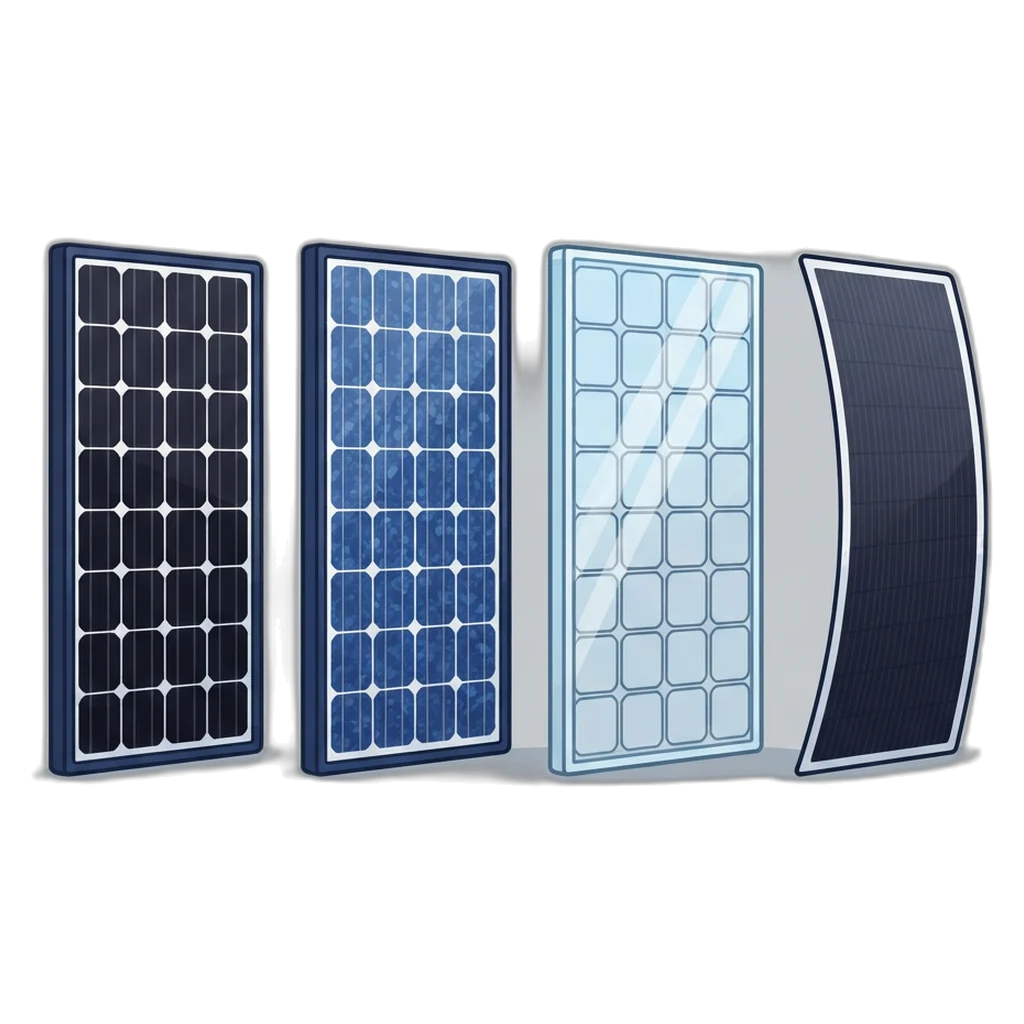
Most types of solar panels fall into two families. Crystalline silicon panels use wafers cut from silicon and make up most rooftop panels sold today. Thin-film panels use very thin layers of material laid on glass, metal or plastic.
On top of that, makers add features that cut across both families: bifacial (power from both sides), half-cut cells, and flexible builds. So one panel can be monocrystalline, TOPCon, half-cut and bifacial all at once. When you read a quote, those words describe different parts of the same panel.
If you want a deeper science primer, the US Department of Energy PV basics page explains how a solar cell turns light into electricity. For a plain-language version, read our guide to how solar panels work.
Why panel type matters in the Philippines
Filipinos search for the types of solar panels because quotes list terms like mono PERC, n-type TOPCon or bifacial, and the prices differ. Knowing what each term means helps you compare quotes fairly.
Three local conditions make the choice matter more:
- Heat. Panels lose power as they get hotter, and roofs here get very hot from late morning to mid-afternoon.
- Roof space. Many urban homes have small or shaded roofs, so watts per square meter count.
- Typhoons. Frames, glass and mounting must handle strong winds and heavy rain.
Peak sun hours in the Philippines are typically about 3.5–5 hours a day depending on place and season. You can check your own city on the Global Solar Atlas, then size your system with our solar setup calculator.
Monocrystalline: PERC, TOPCon and HJT
Monocrystalline panels are made from cells cut from a single silicon crystal. They look uniformly dark, often black, and they give the most power per square meter among the common types of solar panels for homes. Today, most rooftop panels in home quotes are monocrystalline.
Within mono, the cell design is what changes. You will see three names:
- PERC (passivated emitter and rear cell): adds a passivation layer on the back of the cell that cuts electrical losses at the rear and reflects unused light back for a second pass. It was the standard design for years.
- TOPCon (tunnel oxide passivated contact): adds a very thin oxide layer that reduces energy losses at the contacts. It is now common in new mid- and high-wattage panels.
- HJT (heterojunction): sandwiches crystalline silicon between thin layers of amorphous silicon. It tends to be among the more premium options.
N-type vs p-type, simply
Silicon is “doped” with a small amount of another element so it can carry current. P-type silicon uses an element such as boron; n-type uses one such as phosphorus. Most PERC panels are p-type, while TOPCon and HJT are usually n-type.
Why care? N-type wafers tend to suffer less from early light-induced degradation, the small drop in output some panels show in their first months of sun. That is one reason makers have moved toward n-type. Still, the datasheet and warranty for the specific model matter more than the label.
Polycrystalline panels
Polycrystalline panels use cells cut from a cast block of silicon that cools into many small crystals. You can spot them by their blue, speckled look. They were once the budget choice in many markets.
Today they are rare. Mono panels now give more watts from the same space, and makers have shifted production to them. You may still see poly panels in older systems or in small off-grid kits. They work, but on a limited roof they produce less, so compare the cost per watt and the area you have.
Thin-film panels
Thin-film panels coat very thin layers of light-absorbing material onto a backing. Common materials are cadmium telluride (CdTe), copper indium gallium selenide (CIGS) and amorphous silicon. They are used more in large solar farms and some special products than on Philippine house roofs.
Among the types of solar panels, thin-film usually gives fewer watts per square meter than crystalline silicon, so you need more roof area for the same power. Some thin-film products handle heat and partial shade well. For a typical home roof, though, monocrystalline panels remain the usual pick.
Bifacial panels
A bifacial panel can collect light on both faces. The front works like any panel; the back picks up light that reflects off the ground or the surface below. Many bifacial panels use glass on both sides, which makes them sturdy but heavier.
How much extra power the back adds depends on two things: how much light the surface below reflects, and how high the panel is mounted. A light-colored floor, white gravel or a pale concrete deck reflects more than a dark roof. A panel raised well above the surface lets more light reach its back.
On a pitched metal roof with the panel close to the sheet, the rear gets little light, so the gain may be small. On carports, pergolas and raised frames, bifacial panels make more sense. Be wary of any quote that promises a fixed rear gain without looking at your site.
Half-cut cells
Half-cut panels use cells sliced in two, so the panel has twice as many smaller cells. Each half carries less current, which lowers the resistive loss inside the panel. The panel is usually wired as two halves, so shade on one part affects less of the whole.
You can spot them by the line across the middle of the panel. Half-cut is a feature, not one of the separate types of solar panels, and it is now standard on most mono panels, so treat it as normal rather than premium.
Flexible panels
Flexible panels are the lightest of the types of solar panels, with no glass front or aluminum frame. They bend to fit curved surfaces such as boat decks, van roofs and some camping setups.
Know their limits before you buy:
- Stuck flat on a hot roof with no air gap, they run hotter and lose more power.
- Their surface scratches more easily than glass, and dirt can stick.
- Their warranty may be shorter than that of framed glass panels; check the datasheet.
- They are not meant to replace framed panels on a typhoon-exposed house roof.
Side-by-side comparison
This table compares the types of solar panels in plain terms. It is qualitative on purpose, because real numbers depend on the exact model.
| Type | Power per area | Heat handling | Typical use | Notes |
|---|---|---|---|---|
| Mono PERC | High | Good | Home and business roofs | Mature, widely available |
| Mono TOPCon (n-type) | Higher | Good to very good | New home and business roofs | Common in newer quotes |
| Mono HJT (n-type) | Higher | Very good | Premium roofs | Fewer sellers; check local support |
| Polycrystalline | Lower | Fair | Older systems, small kits | Now rare |
| Thin-film | Lowest | Good | Solar farms, special products | Needs more area for the same power |
| Bifacial (any cell type) | Front like mono, plus rear gain | Depends on cell type | Carports, raised frames | Rear gain depends on the site |
| Flexible | Lower | Poor if mounted flat | Boats, vans, curved surfaces | Light; check the warranty length |
General guide only. Compare actual datasheets: efficiency, temperature coefficient and warranty differ from model to model.
Benefits and weak points in short
Mono panels give the most power from a small roof, and n-type designs add better heat handling, often at a higher price per panel. Bifacial adds output only where the site allows it. Poly and thin-film can be cheaper per panel but need more space. Flexible panels win on weight but run hot, and their warranties may be shorter.
Choosing in four steps
- Work out your daily kWh and the number of panels you need.
- Measure the usable, unshaded roof area and note the roof type.
- Shortlist the types of solar panels that fit that space and roof, then ask for each model’s datasheet.
- Compare temperature coefficient, load ratings, warranties and cost per watt across quotes.
Heat and the temperature coefficient
Heat is the hidden factor behind all types of solar panels in a hot country. Panel ratings are measured at a cell temperature of 25°C. On a Philippine roof at noon, the cells run far hotter than that, and output drops as they do.
The datasheet shows how much with the temperature coefficient of Pmax, written as a percent per °C, such as −0.35%/°C. That figure is an example value only. Read the real one on your panel’s datasheet; a number closer to zero is better.
Example calculation
Example: a 720 W panel with an example coefficient of −0.35%/°C, with cells at an assumed 60°C. Temperature rise above 25°C = 60 − 25 = 35°C. Power loss = 35 × 0.35% = 12.25%. Output at that heat = 720 × (1 − 0.1225) ≈ 632 W, before other losses such as dust and wiring.
This is why our sizing method uses an overall factor (for example 0.75) on top of peak sun hours. It also shows why a better coefficient can matter more here than in cooler countries. Heat also lowers panel voltage, which installers must check when they plan strings.
Simple ways to reduce heat loss
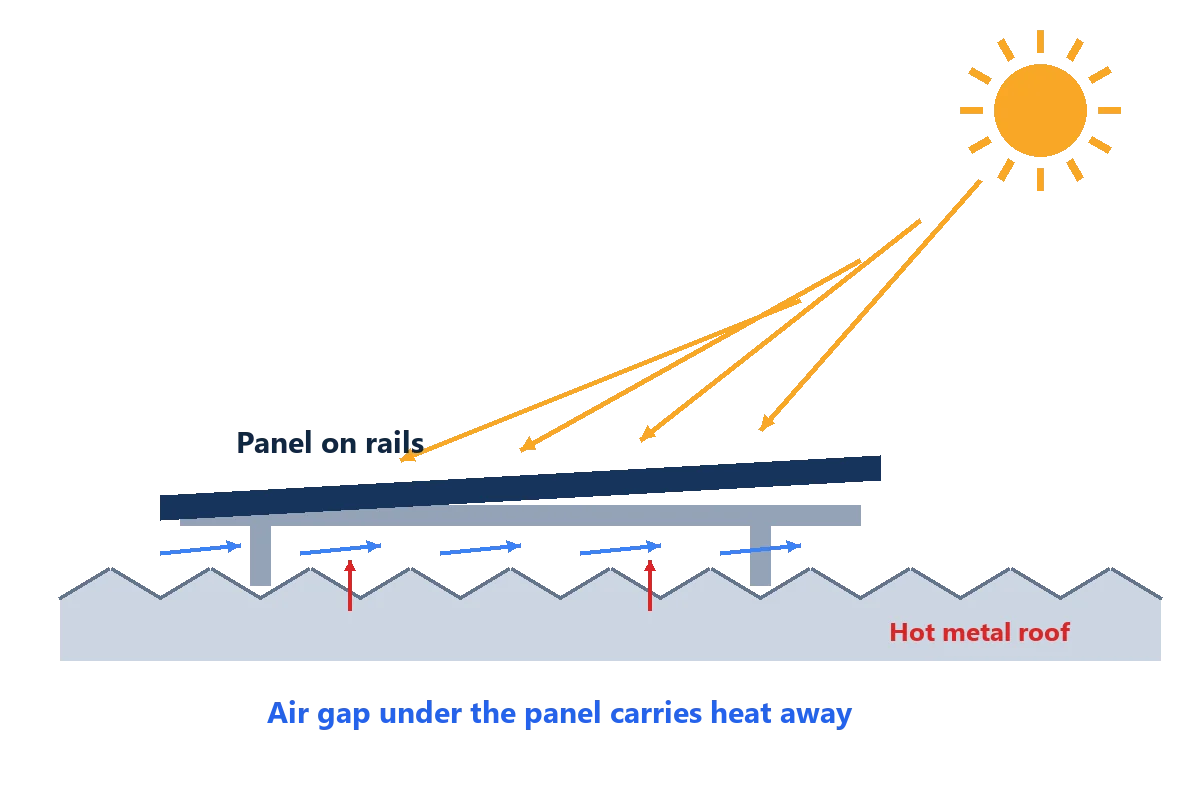
- Leave an air gap under the panels so wind can cool them; panels on rails have one.
- Avoid gluing panels directly onto hot sheets unless the product is made for it.
- Keep panels clean; dust blocks light and cuts output.
Which type suits which roof
Which of the types of solar panels fits best depends on your roof: its space, mounting and wind exposure. Here is a general guide for common Philippine roofs.
| Roof | Good panel choice | Why | Watch out for |
|---|---|---|---|
| Corrugated metal (yero, rib-type) | Framed mono panels on rails | Light, high output, good air gap on rails | Roof sheet condition; sealing every fixing point |
| Clay or concrete tile | Framed mono panels with tile hooks | Standard and well supported | Cracked tiles during install; ask for spare tiles |
| Flat concrete deck | Mono or bifacial on tilted frames | Tilt helps rain wash dust; a pale deck can help bifacial | Waterproofing at anchors; wind uplift on frames |
| Carport or pergola | Bifacial glass-glass panels | Open underside lets light reach the rear | Structure must be designed for the load |
| Boat, van or curved surface | Flexible panels | Light and bendable | Heat and shorter life; not for house roofs |
A site visit decides the final choice. Roof strength, shading and wind exposure differ from house to house.
The panel is only one part of the system. To see how panels, inverter and battery connect in different types of solar setup, visit our solar setup diagram hub. For mounting and permit steps, read the guide to solar panel installation.
Typhoon notes
All types of solar panels on a Philippine roof must survive typhoon season. The panel type matters less than the frame, the glass and above all the mounting. Watch the tropical cyclone wind signals from PAGASA and inspect the array after each storm.
- Mechanical load ratings. The datasheet lists front and rear load ratings in pascals (Pa). The rear (uplift) rating matters most for wind. Ask the installer how the mounting matches it.
- Clamp zones. Load ratings only hold when panels are clamped where the installation manual says. Wrong clamp spots can void the warranty.
- Frame and glass. Check frame depth and glass thickness on the datasheet. Glass-glass panels are stiff but heavy, so the roof must carry them.
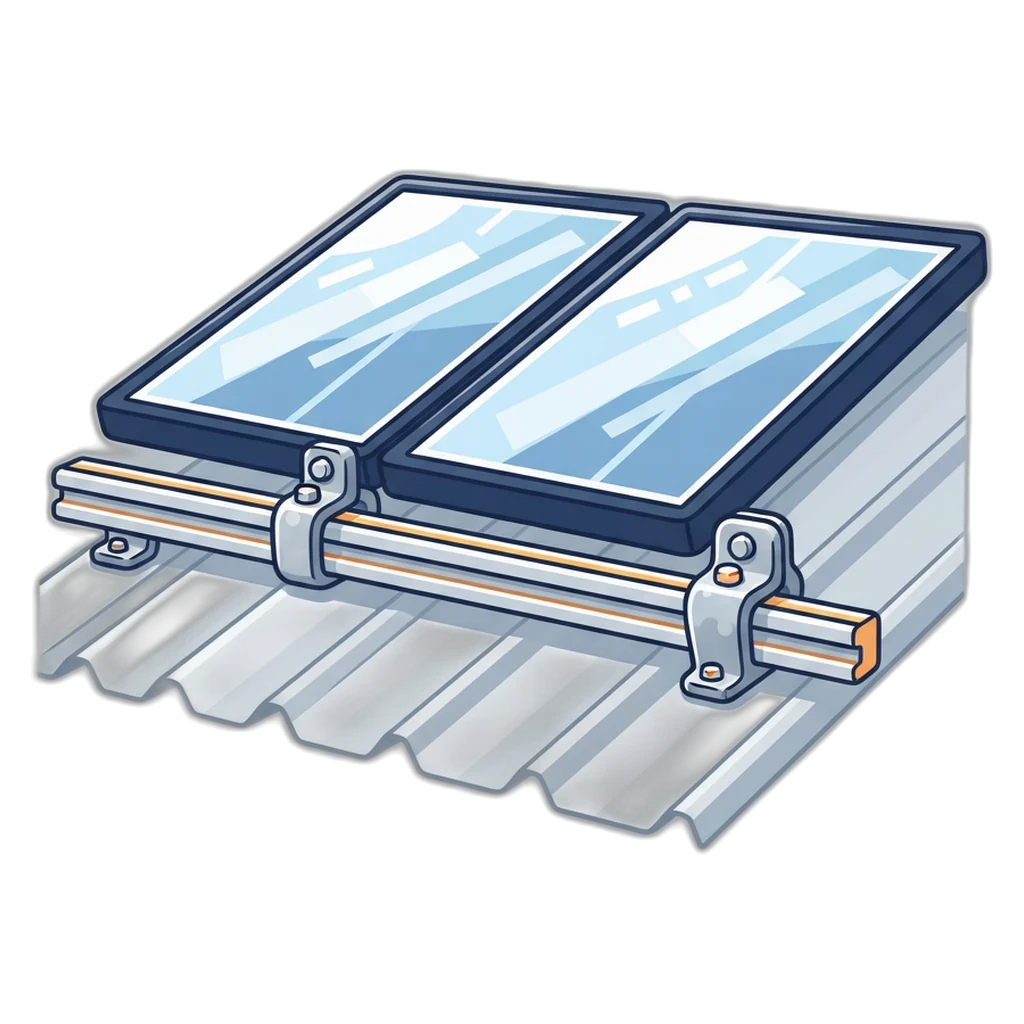
- Mounting. Rails, roof hooks and bolts must suit the wind loads at your site.
How to read a panel datasheet
Every panel has a datasheet, usually a two-page PDF. It is the most honest way to compare the types of solar panels in different quotes. The photovoltaic system overview is useful background on how panels fit into a full system.
| Item | What it means | Why it matters |
|---|---|---|
| Pmax (W) | Maximum power at standard test conditions | The panel’s rated size; used to count panels |
| Voc (V) | Open-circuit voltage, no load connected | Sets the highest string voltage, which rises when cells are cool; must stay under the inverter limit |
| Vmp (V) | Voltage at maximum power | Must sit inside the inverter’s MPPT range, even when hot |
| Isc (A) | Short-circuit current | Used to size fuses, cables and check inverter input limits |
| Imp (A) | Current at maximum power | Normal working current of the string |
| Efficiency (%) | Share of sunlight turned into power | Higher means more watts per square meter |
| Temperature coefficient (%/°C) | Power change per degree above 25°C | Closer to zero loses less in heat |
| Dimensions and weight | Size and mass of one panel | Decides how many fit and the roof load |
| Mechanical load (Pa) | Front and rear load the panel passed in testing | Key for typhoon exposure |
| Warranties | Product (defects) and performance (output over time) | Read both terms and who handles claims locally |
Standard test conditions (STC) mean 1,000 W/m² of light at a 25°C cell temperature. Real roofs rarely match them.
Standards to look for
The common international module standards are IEC 61215 (design qualification) and IEC 61730 (safety). Near the coast, also ask about IEC 61701 (salt mist). Look for them on the datasheet and ask for the certificate if unsure. Locally, BPS certification rules for solar parts were still a draft as of mid-2026, so check the DTI list of products under mandatory certification and look for PS or ICC marks where they apply.
Brand matters too, mainly for warranty support. Our guide to the best solar panel brands in the Philippines covers what to check. Our own JH Solar Version 1 system uses 620 W panels rated Voc 48.6 V, Vmp 41.3 V and Isc 16 A; Version 2 uses 720 W panels, whose electrical data comes with your quote. Ask us for the datasheets before you decide.
On your phone
- Download each quoted panel’s datasheet PDF and save it offline, so you can compare in the store or on the roof.
- Zoom into the electrical table and screenshot the Pmax, Voc and temperature coefficient lines.
- Photograph the label on the back of a delivered panel and match it to the datasheet model number.
- Use your phone’s calculator to repeat the heat example above with the real coefficient.
- Keep a simple note listing the types of solar panels in each quote, with price and watts, so you compare like with like.
Safety and Electrical Reminders
- A panel in daylight produces voltage even when disconnected, and even dim light is enough. Cover it with an opaque sheet before handling connectors.
- Several panels in series can reach dangerous DC voltage. Never pull a connector under load.
- Do not walk on panels. Microcracks from foot pressure can cut output and are hard to see.
- Roof work needs fall protection, especially on wet metal sheets during the rainy season.
- Glass-glass and large panels are heavy and catch wind like a sail. Carry them with two people and never in strong wind.
- String design, grid connection and panel board work belong to a registered master electrician or professional electrical engineer.
Solar panels make DC power whenever light hits them, and batteries hold enough energy to start a fire if they are shorted. Work on the grid side, the AC panel board or a net-metered system belongs to a licensed electrical practitioner following the Philippine Electrical Code. Our numbers are estimates, not a design or a quote.
Frequently Asked Questions
Which type of solar panel copes best with Philippine heat?
Look at the temperature coefficient of Pmax on the datasheet, not the panel type name. The number closer to zero loses less power as the panel heats up. Many n-type designs such as TOPCon and HJT list good values, but compare the actual datasheets of the models you are quoted, side by side.
Are polycrystalline solar panels still worth buying?
Of the older types of solar panels, poly still works, but it has become rare because monocrystalline panels give more watts from the same roof area. If you find poly panels at a very low price, compare the cost per watt, the warranty and the space you have. On a small roof, the higher output of mono panels usually matters more.
Do bifacial panels make sense on a house roof?
Often not much. A bifacial panel only gains from its back side when light reflects up from below. Mounted low and flat on a metal or concrete roof, little light reaches the rear. They make more sense raised on carports, pergolas or ground frames over light-colored surfaces. Ask the installer to explain the expected rear gain.
Can I mix different panel types or wattages in one string?
It is best not to. Panels in series share the same current, so a weaker or different panel holds back the whole string. Keep one model per string, or per MPPT input on the inverter, and check that the string voltage stays within the inverter limits. Let your installer design any mixed setup.
Do solar panels still produce power on cloudy or rainy days?
Yes, but much less. Panels respond to light, not heat, so output drops when clouds block the sun. During the rainy season, expect lower daily production than in the dry months. This is why sizing uses peak sun hours averaged for your area, and why a battery helps on gray days.
How long do solar panels last, and what does the warranty cover?
Panels usually come with two warranties: a product warranty for defects and a performance warranty that promises a minimum output after a set number of years. The exact terms differ by maker and model, so read both on the datasheet and ask who handles claims in the Philippines.
Conclusion: choose by datasheet, not by label
The types of solar panels for Philippine homes come down to a few practical choices. Monocrystalline is the standard, with TOPCon and HJT as newer n-type options. Bifacial pays off mainly where light reaches the back, and flexible panels suit curved or moving surfaces rather than house roofs.
Whatever you choose, read the datasheet: power, voltage, temperature coefficient, load ratings and warranties. Then size the system for your bill. When you are ready, JH Solar can help you match panels to your roof and needs, with the price confirmed after a site assessment.
Find the right panels for your roof
Work out how many panels your home needs, then compare our all-in-one systems.
Related Guides
- JH Solar HomeStart here: JH Solar systems and every guide on one page.
- Best Solar Panel BrandsPanels, inverters and batteries: what makes a brand good.
- Solar Panel Price PhilippinesPanel, battery and installation costs, line by line.
- Solar ComputationTurn your electric bill into a system size in a few taps.